

Bioshock is one of the few game series that has drawn me in from the beginning, stomped on my happiness, and then pulled me back in. I can't wait to play the noire-themed DLC that came out this past Tuesday, but my love for the series prompted me to require my boyfriend to play through all three games before I was willing to download my season pass. I wanted a recap, and he needed to understand the world before I played the newest installment in front of him non-stop.
Before I run off to download my Buried at Sea DLC, I thought it only fitting that I also post a quick critical recap of all three games. Though the oldest came out years ago, and the newest is already a year old, this is just one of those series that, like Halo or Final Fantasy, every gamer should at least try to be familiar with because it's really that good.
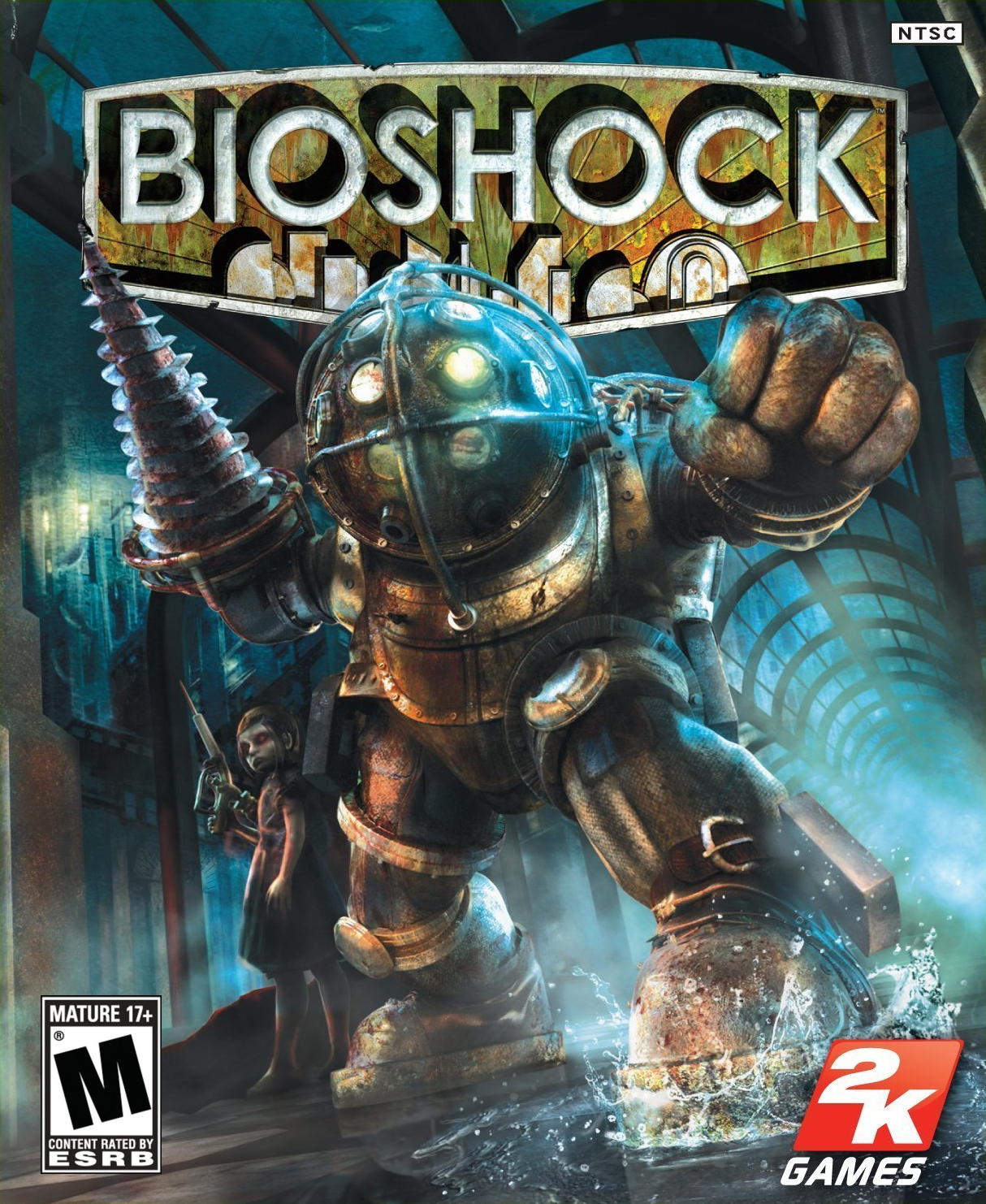 Much of the story in the original Bioshock centers around Andrew
Ryan's capitalist, no-holds-barred society that was once a haven for
scientists and artists who worked in a moral gray area. Now their
city has been destroyed, and the player is led to believe that a
rebellion has sprung up, rejecting Rapture's soulless treatment of
humans and leading you, Jack, on a quest to put what can be changed
right again. Of course, that's all bunk, and we realize that about
3/4th of the way through the game in an exciting reveal that has
become one of Irrational's signature moves. The design of Rapture was
unique, the game's world was unique, and I was very impressed the
product the designers at Irrational Games for getting it so right on
their first attempt at a first-person-shooter.
Much of the story in the original Bioshock centers around Andrew
Ryan's capitalist, no-holds-barred society that was once a haven for
scientists and artists who worked in a moral gray area. Now their
city has been destroyed, and the player is led to believe that a
rebellion has sprung up, rejecting Rapture's soulless treatment of
humans and leading you, Jack, on a quest to put what can be changed
right again. Of course, that's all bunk, and we realize that about
3/4th of the way through the game in an exciting reveal that has
become one of Irrational's signature moves. The design of Rapture was
unique, the game's world was unique, and I was very impressed the
product the designers at Irrational Games for getting it so right on
their first attempt at a first-person-shooter.Then came the concept game.
In the second game, the player gets to play as a Big Daddy, which is really exciting for the first twenty minutes or so. Unfortunately, the second Bioshock's normal difficulty has consistently shown to be more effort than a "normal-playing" player would like to expend. Add to that, a weak story line and the tedious escorting of Little Sisters, if the player wants more ADAM and doesn't want to kill children in their video game, and we have the worst game of the three.
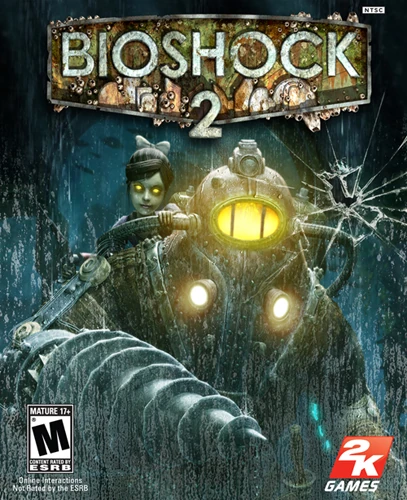
The second Bioshock takes place in Rapture, post-Jack and Ryan. Another megalomaniac has taken
over the remnants of Ryan's empire and has a different ideology to protect. Story-wise, this game begins to lean a little more toward religious ideology than the free-market capitalism of the original Bioshock and adds a little in that sense. Ideology is ideology, though, regardless of whether organized worship is involved, and the player finds that Lamb or Ryan, everyone has their own plan for Rapture, and it's never good. Then again, when you rule a world of drugged-up Splicers, it's hard to foster civic involvement.
These ideological themes extend into the third game, my personal favorite, as well. Rather than taking place in Rapture, this story takes place in a floating city named Columbia in 1912. The world the player is introduced to is vibrant and thriving, if a tad religious and misguided. Columbia sits in the clouds, rather than underwater, and is characterized by oversized statues of their religions "prophets": George Washington, Thomas Jefferson, Benjamin Franklin, and of course, the founder of Columbia, Zachary Hale Comstock (who, by the way, has a masterful beard).
One of the lesser additions to the Infinite world was also a favorite of mine: an in-game, occasionally “live” soundtrack. The game contains 1912-ish covers of more contemporary songs like Shiny Happy People by REM, Fortunate Son by Creedence Clearwater Revival, and God Only Knows by the Beach Boys (clip below), to name only a few. Though some of these are played over speakers and radio, like in the previous two games, Infinite also has encounter-type occurrences where you can find NPCs singing the song in-scene. It was a little touch, but allowing for little scenes that the player can either ignore or take a moment to watch is one of the better examples of what kind of an all-encompassing game this is.
Some of the changes in Infinite were more major, though, and created a world that was decidedly unlike anything else in the Bioshock universe. Rather than ADAM-based plasmids and EVE, we are given Vigors and salts, which are not dependent on ADAM and ADAM-harvesting Little Sisters. Without the need for Little Sisters, there's no need for Big Daddies to protect them, and thus the whole game world changes. There is only one Little Sister equivalent, though she is never referred to by that terminology, and only one Big Daddy equivalent. Neither looks or behaves much like those characters did in the first two games, either.
 |
| Fan favorites, Little Sister and Big Daddy's absence in Infinite may upset some Rapture devotees. The story more than makes up for missing out on our favorite brain-washed psychopaths. |
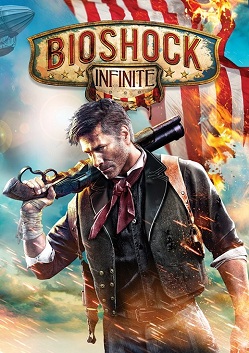
I could go on and on about how the designers set up the player's identity as and sympathy for Booker – by allowing us to see his face on multiple occasions (including a full portrait on the cover art), the desperation he shows in his death-scene flashbacks, the deep-seeded fear of water they hint at through the first part of the game – but I would have a hard time not going overboard with it. I'll just say that it's impressive to me as both a writer and a gamer. It's a compliment to the players when designers create a smart game. It shows respect of the players and of the fandom, and I appreciate it.
 |
| Welcome to Columbia, Bioshock Infinite. |
Bioshock player, a complex storyline, and by far the best non-fighting companion that I've ever had. Elizabeth, who starts traveling with Booker about 20 percent (or so) of the way through the game, doesn't get injured and picks up useful items for you during battle. Go a little farther in the game, and she'll be able to bring barrels of weapons, crates of health, and mechanical fighters into the battles as well. Useful! Even better, though, is the character arc she experiences, which I will not actually touch on here. It's one of those stories that's so good, you should experience it for yourself.
Keep in mind that this is the only game of the three that does not have choice-dependent ending. Whereas Bioshock has two endings, and Bioshock 2 seems to have about four, Bioshock Infinite only has the one. That change of tactic makes me wonder if their next Bioshock game isn't completely dependent on a set up from Bioshock Infinite.
